News
The University of Free State and Sayari Earth Launch Partnership to Advance Soil Carbon Science


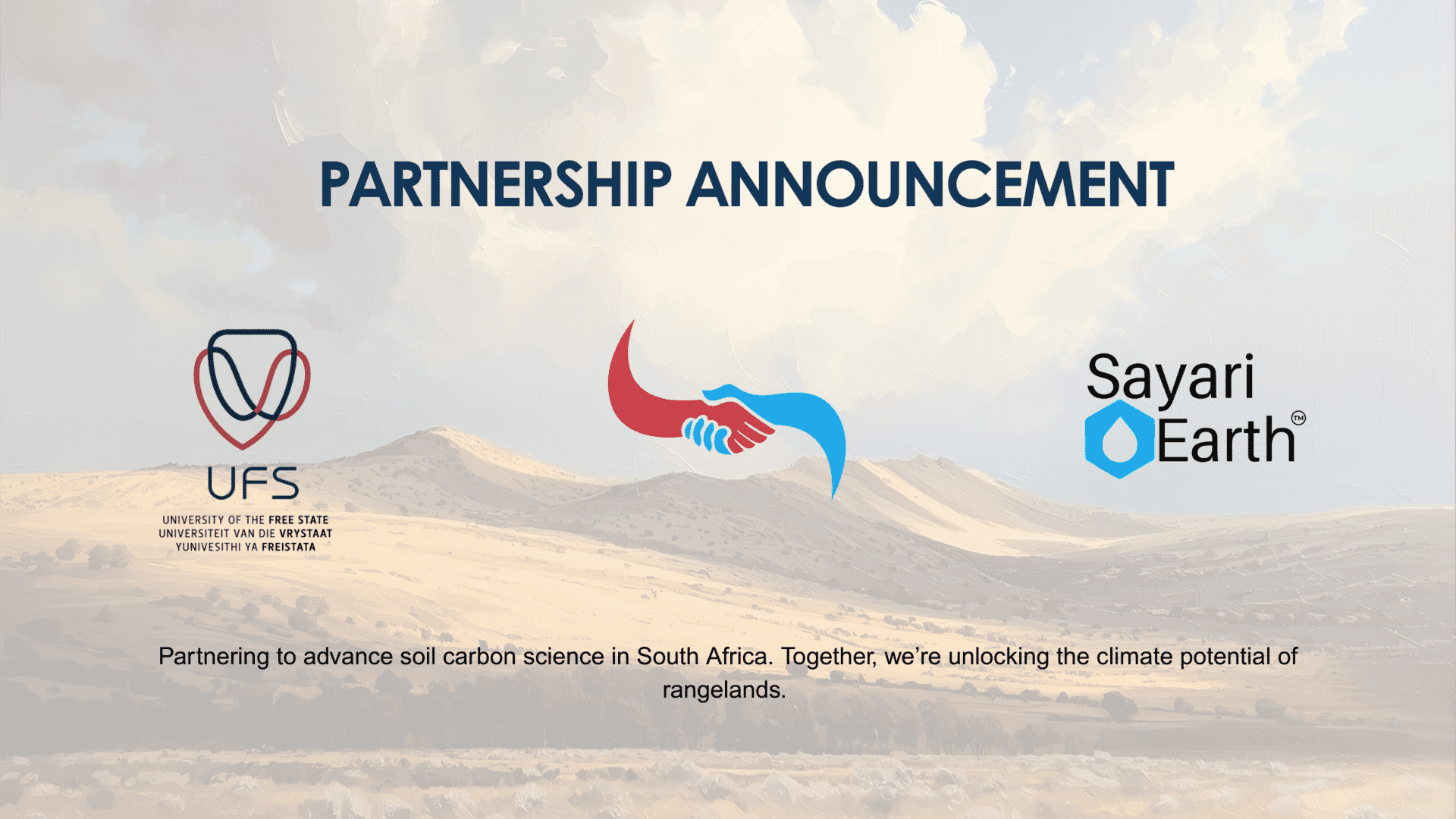
UFS and Sayari Earth have signed a landmark Memorandum of Understanding (MoU) to tackle one of the biggest hurdles in the global carbon market: the need for stronger data and models for soil carbon measurement, reporting, and verification (MRV). By combining cutting-edge science with advanced earth observation technology, the collaboration aims to unlock the full climate potential of South Africa’s rangelands through a research-based approach.
Soil carbon sequestration holds immense promise for climate mitigation, with global soils storing an estimated 2,500 gigatons of carbon; over three times the amount in the atmosphere. In South Africa, grasslands and rangelands span more than 65% of agricultural land and can store up to 150 tons of carbon per hectare. Yet this potential is stalled by costly, inconsistent data and models, with sampling costs of $3–$10 per hectare and error margins as high as 40% in under-studied regions like sub-Saharan Africa. Remote sensing and models are improving but region-specific validation needs improvement. Unlocking the climate and livelihood benefits of soil carbon in South Africa depends on closing these data gaps and building more reliable, affordable, and transparent MRV.
In a partnership designed for impact, the collaboration between UFS and Sayari Earth aims to combine rigorous soil sampling campaign data with next generation monitoring tools such as flux measurements and use of remote sensing data to advance soil carbon MRV in rangeland systems.
Core areas of focus include:
- Developing robust, context-specific models for soil carbon sequestration, rooted in South African ecosystems and validated through field research.
- Supporting post-doctoral research in the next generation of soil carbon science and building bigger datasets.
- Deploying Sayari Earth’s digital observation monitoring platform, earth observation and soil datasets alongside UFS’s analysis, research and carbon flux technology to build stronger soil carbon and soil carbon saturation level science.
Together, these resources will give emerging researchers hands-on training in real-world conditions, bridging the gap between field science, technology, and market-ready carbon solutions. By combining field science, advanced monitoring tools, and access to large-scale rangeland projects, the partnership is designed to establish a stronger evidence base for soil carbon sequestration in South Africa. The ultimate goal is to position South Africa’s rangelands as a global leader in climate-smart land management and carbon removal.
Professor Linus Franke, Research Chair in Climate Change Impacts and Mitigation in Agriculture at the Department of Soil, Crop and Climate Sciences said of the partnership:
“Soil carbon plays a critical role in soil functioning and rangeland productivity, as well as in climate change mitigation. New tools to assess carbon dynamics are opening exciting new avenues for research. By collaborating with partners such as Sayari Earth we can leverage our research efforts and maintain close links with the sector, ensuring our research is relevant to industry and society”.
Dr. Hassan Sachedina, CEO of Sayari Earth added:
“It is critical that Sayari Earth partners with world class universities to advance soil carbon science and innovation, and to reduce barriers to climate markets for communities and landowners. We are grateful for this partnership with UFS.”
Proud to be partners with: